What a proper pump-out includes
- Locating and opening the tank (including digging to buried lids)
- Measuring sludge and scum layers before pumping (that's what sets your real schedule)
- Complete pumping of both compartments, not a skim job
- A quick condition check: baffles, inlet/outlet, water flowing back from the leach line
- A straight recommendation: when to pump next, and whether anything actually needs fixing
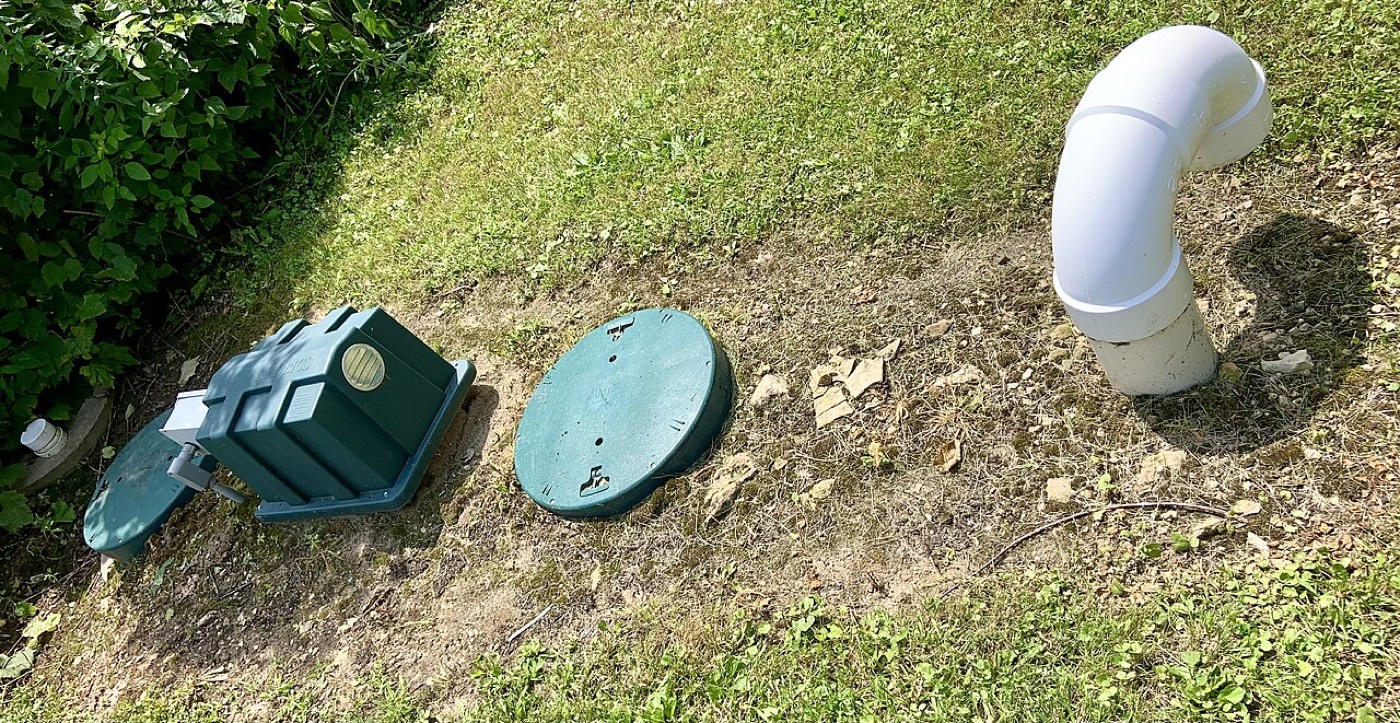
Ask about risers
Those green lids are risers: extensions that bring your tank's access up to ground level. If your lids are buried, every service visit starts with shovel time you're paying for. A one-time riser install pays for itself in two or three pump-outs, and out here in sandy soil it's a quick job. Any pro we connect you with can quote it during a regular service call.
High Desert specifics
Phelan-area tanks are mostly 1,000–1,250 gallons on older properties and 1,500 on newer builds. Sandy soil drains well, which hides problems until they're serious: a tank can run over capacity for months before the house notices. Long dirt driveways and deep-set tanks are normal out here; the pros we work with bring hose length and dig time, not excuses.
When to book it
On a schedule, every 3–5 years (see the schedule guide). Off-schedule, book promptly if you notice slow drains through the whole house, gurgling, odor near the tank or leach field, or unusually green, wet ground above the lines. Those are capacity symptoms: pumping now is cheap; waiting turns it into an emergency call.
Septic question? Get a straight answer.
Free quote by email, answered by a licensed local septic pro.